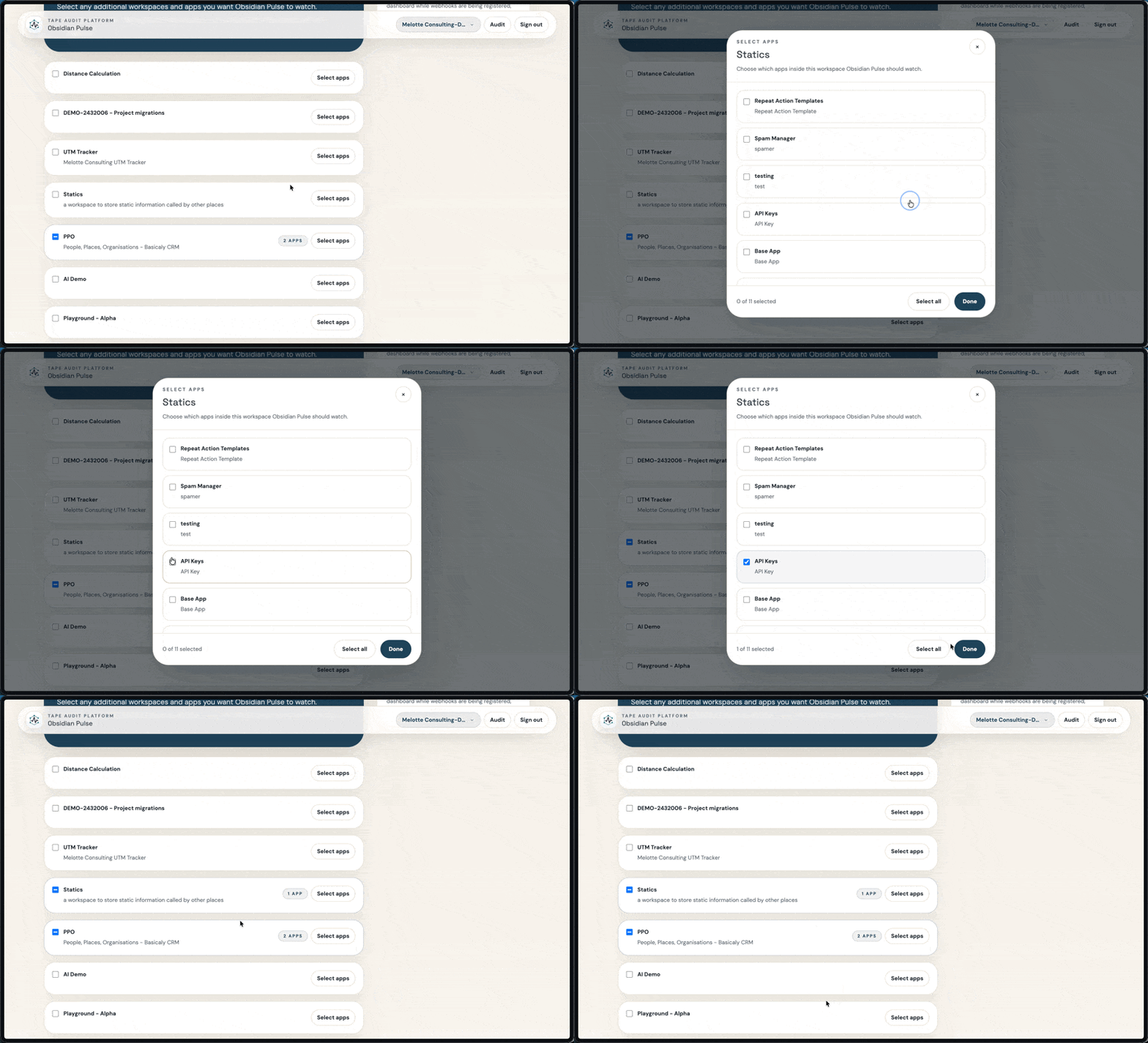
The subject of audit trails and record recovery has come up a few times on the forums recently, and I’ve had a few DMs about it too. So it feels like a good time to share something I’ve been building.
This is Obsidian Pulse - an audit trail and recovery tool for Tape.
What it does
Obsidian Pulse gives your Tape organisation an audit trail of record activity, along with rollback and recovery capabilities.
It tracks creates, updates, and deletes, allowing you to:
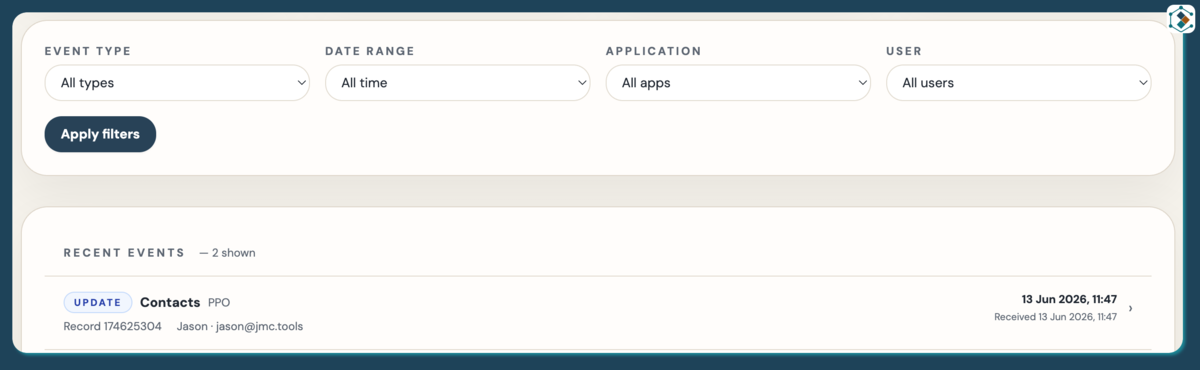
- Browse the full event timeline filtered by event type, date, app, or user
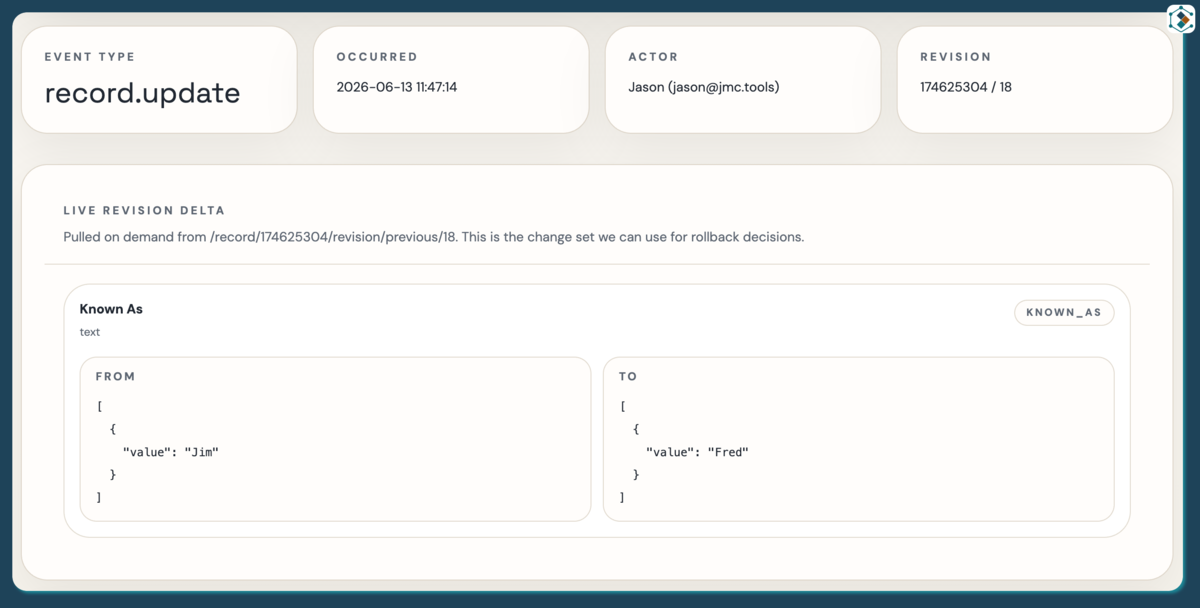
- See exactly what changed with field-level diffs pulled directly from Tape’s revision API
- Roll back an update and restore previous values to a record with a single action
- Recover deleted records using Tape’s native recovery where available, with an additional safety net when needed
How record recovery works
When you restore a deleted record, Obsidian Pulse first asks Tape directly. Tape retains deleted records for a period of time and can often recover them natively.
If Tape can no longer recover the record, Obsidian Pulse can fall back to its own stored snapshot, provided delete retention is enabled. When enabled, the full record payload is captured and encrypted (AES-GCM) at the point of deletion before the record disappears from Tape.
In practice, this means record recovery is often possible even without delete retention enabled because Tape’s own recovery is attempted first. The stored snapshot acts as a longer-term safety net for when Tapes in built record restore is unavailable.
A few other things worth knowing
We don’t store field-level diffs.
The raw webhook event is stored along with some revision metadata, but all field-level change information is retrieved live from Tape’s revision API when you inspect an event. This means you’re always looking at Tape’s own source of truth rather than calculated data that could become stale.
Security matters.
Any retained record snapshots are encrypted at rest using AES-GCM, and delete retention can be enabled or disabled depending on your requirements.
How do you get onboard
Reach out to me here or via the site and we can discuss the options you need and get you onboarded.
Who it’s for
Obsidian Pulse is aimed at organisations running important data through Tape and wanting a safety net when things go wrong.
It can be particularly useful if you:
- Have multiple people editing records and need visibility into who changed what
- Need protection against accidental deletes
- Have compliance, governance, or audit requirements
- Want the ability to restore previous versions of important records
See it in action
A short screencast showing app onboarding and field rollback:
 https://obsidian-pulse.jmc.tools/
If you’ve ever lost a record, needed to know who changed something, or wished for a change level rollback Obsidian Pulse could be for you.